
The EUIPO Supports ASEAN Workshop to Strengthen Trade Mark Examination Practices
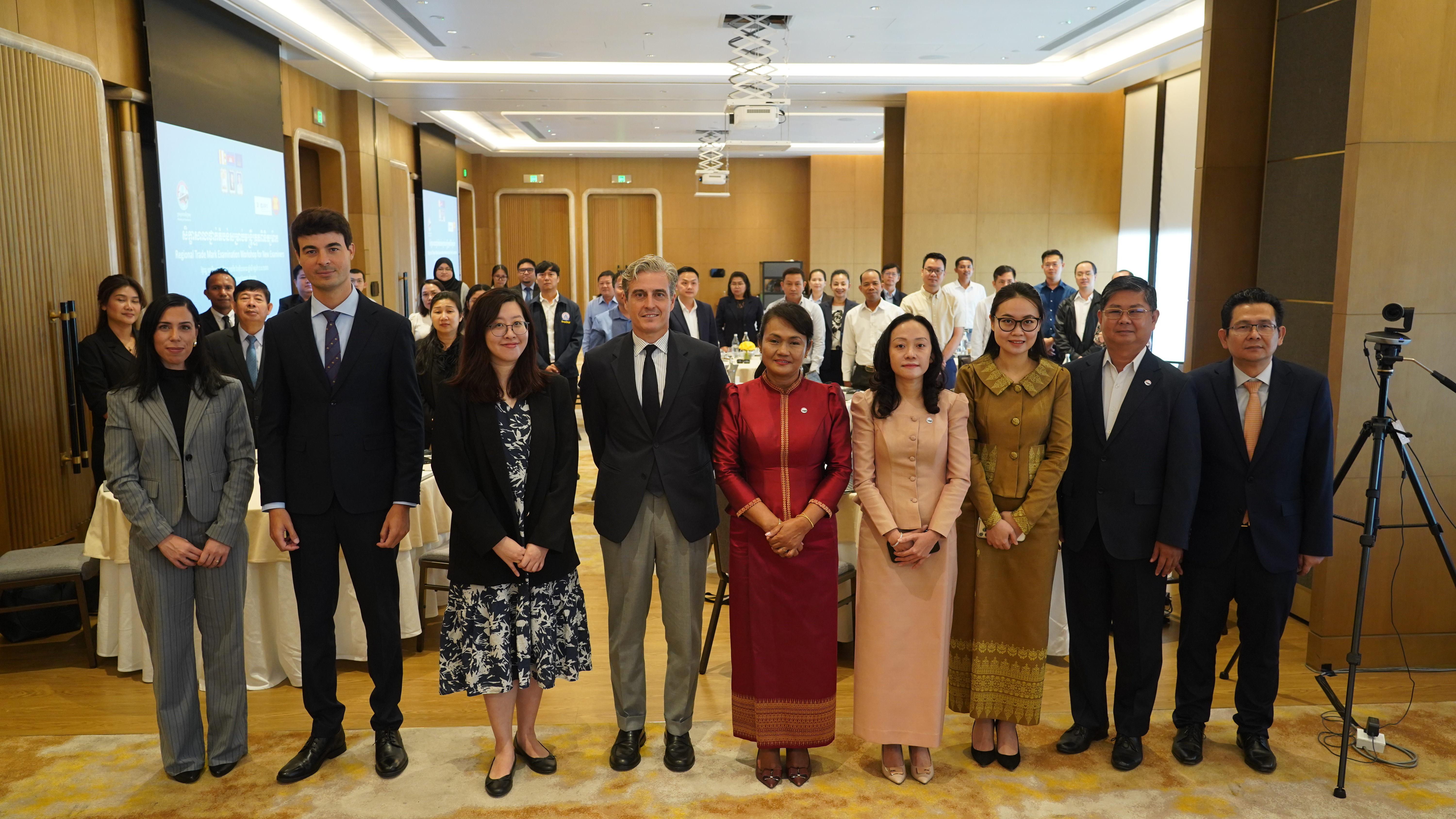
The European Union Intellectual Property Office (EUIPO), through the EU-ASEAN Sustainability Connectivity Package – Intellectual Property Rights (SCOPE IPR), organised the ‘Regional Trade Mark Examination Workshop for New Examiners’ from 27 to 29 July 2026 in Phnom Penh, Cambodia.
The workshop brought together trade mark examiners with one to three years of experience from ASEAN Member States’ intellectual property offices to enhance their technical skills and promote greater consistency in trade mark examination across the region.
Held as part of the implementation of Annual Work Plan 3 (2026–2027), the workshop contributed to ongoing cooperation between the EUIPO and the ASEAN Member States to support the advancement of efficient and user-focused IP offices.
Over three days, participants received training on key aspects of substantive examination, including distinctiveness, descriptiveness and other legal grounds for assessing the registrability of trade mark applications. The programme also addressed the use of digital tools and explored how emerging technologies, including artificial intelligence, are influencing IP examination.
The workshop provided a platform for participants to exchange practices and experiences with experts from the EUIPO and ASEAN IP Offices. These discussions supported efforts to align examination with international best practices and to promote more harmonised approaches to trade mark protection throughout ASEAN.
The activity was aligned with Strategic Measure 1 of the ASEAN IPR Action Plan 2026–2030, which aims to build digitally empowered and future-ready intellectual property offices capable of responding to evolving technological and market developments.
By strengthening the skills of new examiners, the workshop reinforced the important role of national IP offices in delivering high-quality services to businesses, creators and innovators. Through SCOPE IPR, the EUIPO continues to work with ASEAN partners to enhance institutional capacity, foster regional cooperation and support stronger intellectual property systems across Southeast Asia.