

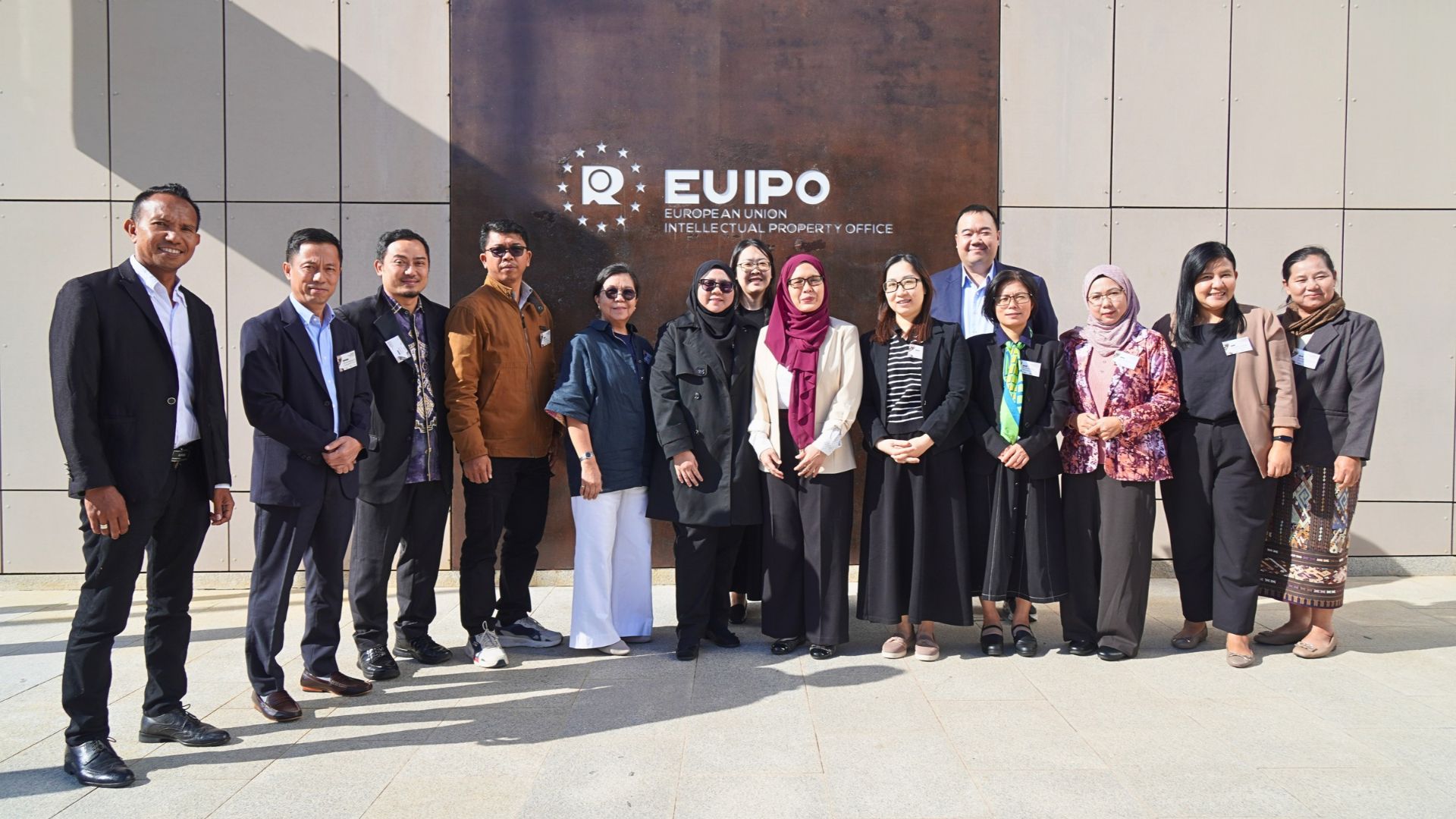
EUIPO Connects ASEAN Partners with GI Cooperation Community
The European Union Intellectual Property Office (EUIPO), through its SCOPE IPR project, facilitated the participation of representatives from ASEAN countries in the International Conference on Strengthening Geographical Indication (GI) Cooperation Projects, held on 5-6 November 2026 in Alicante, Spain.
Organised by oriGIn and Origen España, the conference brought together international producers, experts and institutions to reflect on two decades of GI cooperation and explore opportunities for the future.
The SCOPE IPR delegation included representatives from producers, ASEAN Member States’ intellectual property offices, the ASEAN Secretariat and representatives from the SCOPE IPR project team. Some also contributed as speakers, sharing perspectives from Southeast Asia with participants from around the world.
The conference addressed a range of topics, including market access, visibility, protection and enforcement, as well as opportunities for craft and industrial GIs. Participants also discussed the role of effective control systems and how geographical indications can contribute to regional development and the preservation of cultural heritage. The programme also included a visit to a producer of the protected GI of Jijona and Turrón de Alicante, providing a local example of a protected GI from Alicante which helps preserve local traditions.
Looking ahead, the programme explored how future GI cooperation projects could respond to priorities through stronger institutional coordination, digital tools and targeted support for producers. Climate resilience, sustainability and youth engagement were among the areas considered in shaping the next generation of international cooperation.
For the ASEAN delegation, the conference provided an opportunity to engage with international partners, learn from established GI systems and contribute regional perspectives to discussions on future cooperation. The EUIPO, through SCOPE IPR, continues to support the development of GI systems across Southeast Asia.